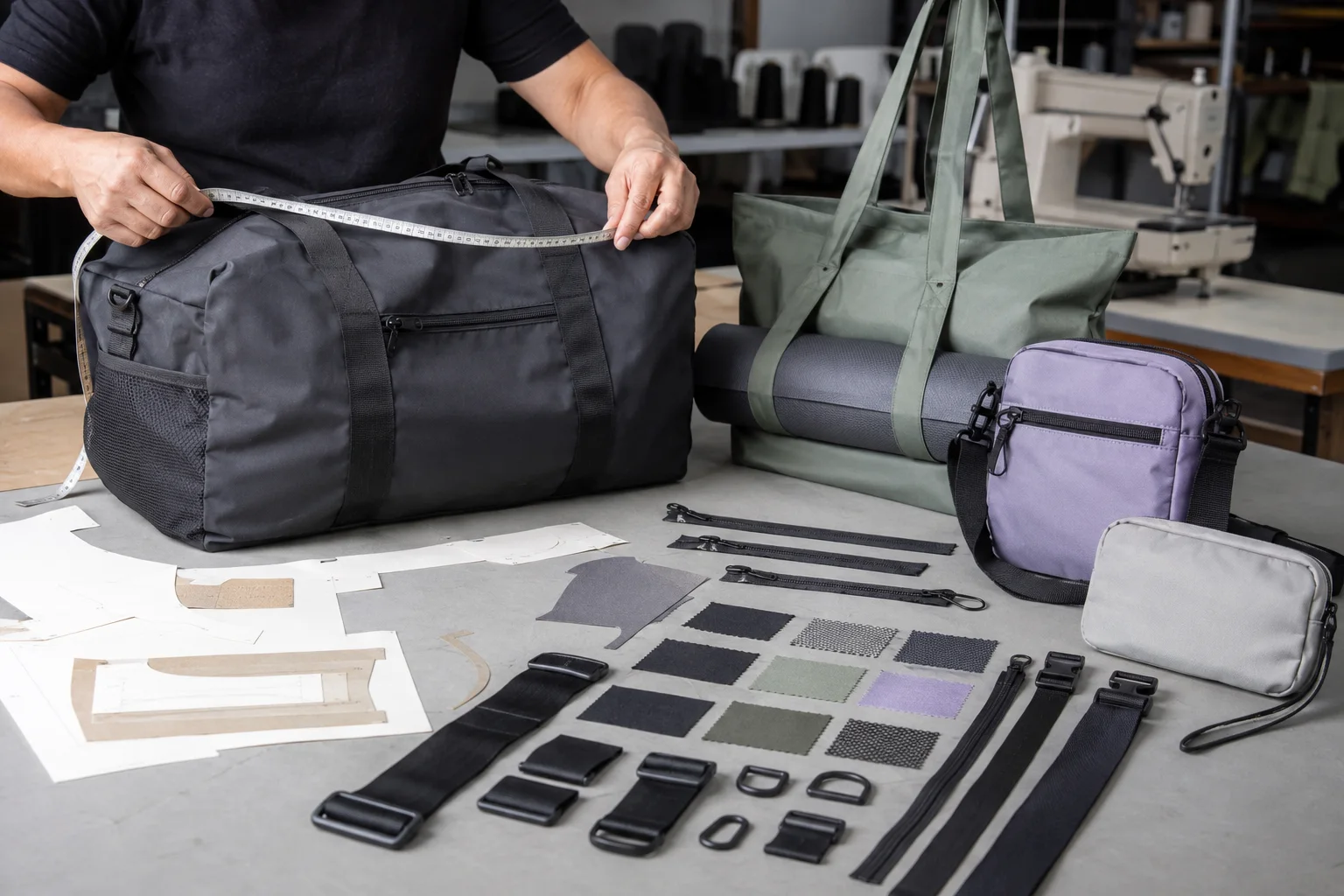
Material defects that account for most fabric-related claims, and the sourcing or inspection control that removes each one. Duffel and pouch in a set are two shades of the same colour Cause: cut from different dye lots or different base fabrics. Control: one dye lot per colourway across the set ; where fabrics differ, dips are approved side by side in the D65 box. Bulk fabric is 20–30 g/m² lighter than the swatch Cause: mill substituted a lighter construction. Control: GSM and denier written on the purchase order and measured on every roll at incoming inspection ; rolls outside ±5% are rejected. Fabric order adds two weeks to the lead time Cause: fabric outside our supplier network. Control: 200+ verified suppliers cover the nine families above with 0 days added; out-of-network fabric is flagged at quote as +7–14 days. See material sourcing . PU coating cracks or peels after one season Cause: PU hydrolysis in heat and humidity, made worse by a thin single-pass coating on bags stored damp. Control: coating type and number of passes written on the purchase order, TPU lamination specified for bags that stay wet, and an accelerated-ageing test to ISO 1419 by an independent lab on request; see wet bags . Dark body bleeds into a light lining Cause: unfixed dye on deep shades. Control: colour-fastness rub test on the lab dip (dry and wet) before approval; deep navy, black and red are tested on every bulk lot. Recycled fabric claim cannot be documented Cause: no paperwork from the mill. Control: RPET is bought only with the supplier’s content declaration and lot number, filed with the order; see compliance documents . Factory
wet bags.