
We Would Love To Hear From You.
* Your information will be kept strictly confidential.
* Share your needs with us, We’ll contact you in very short time.

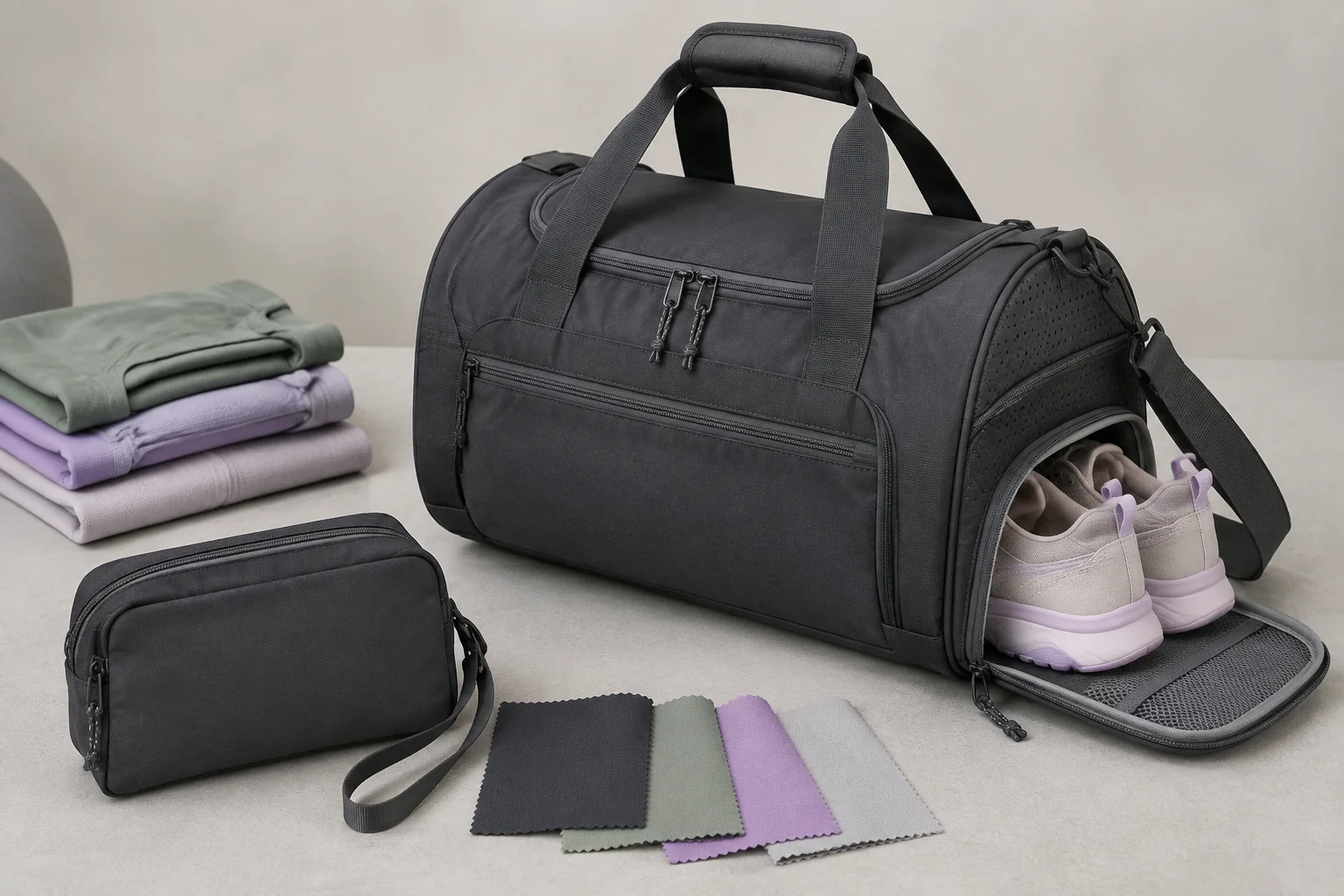
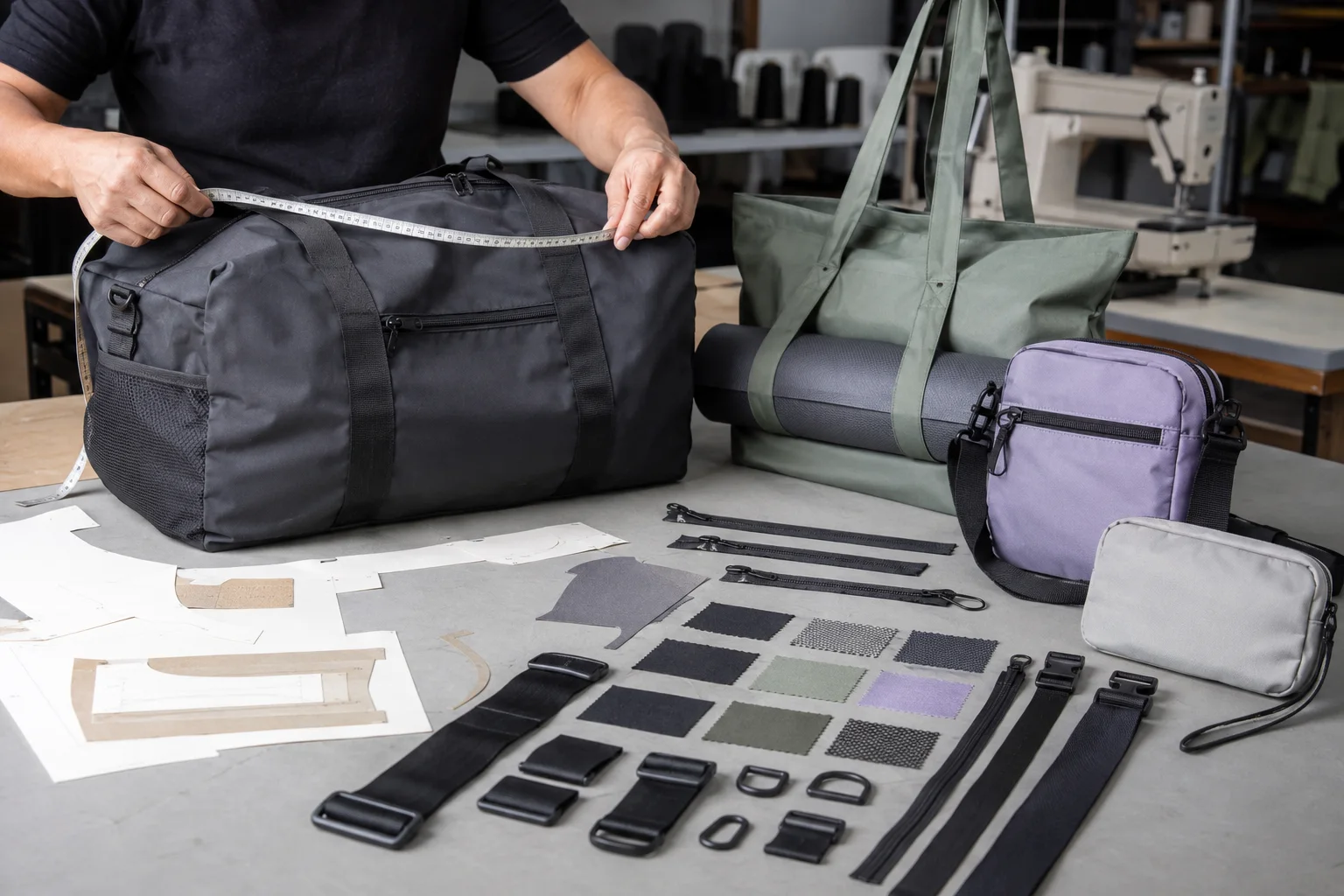
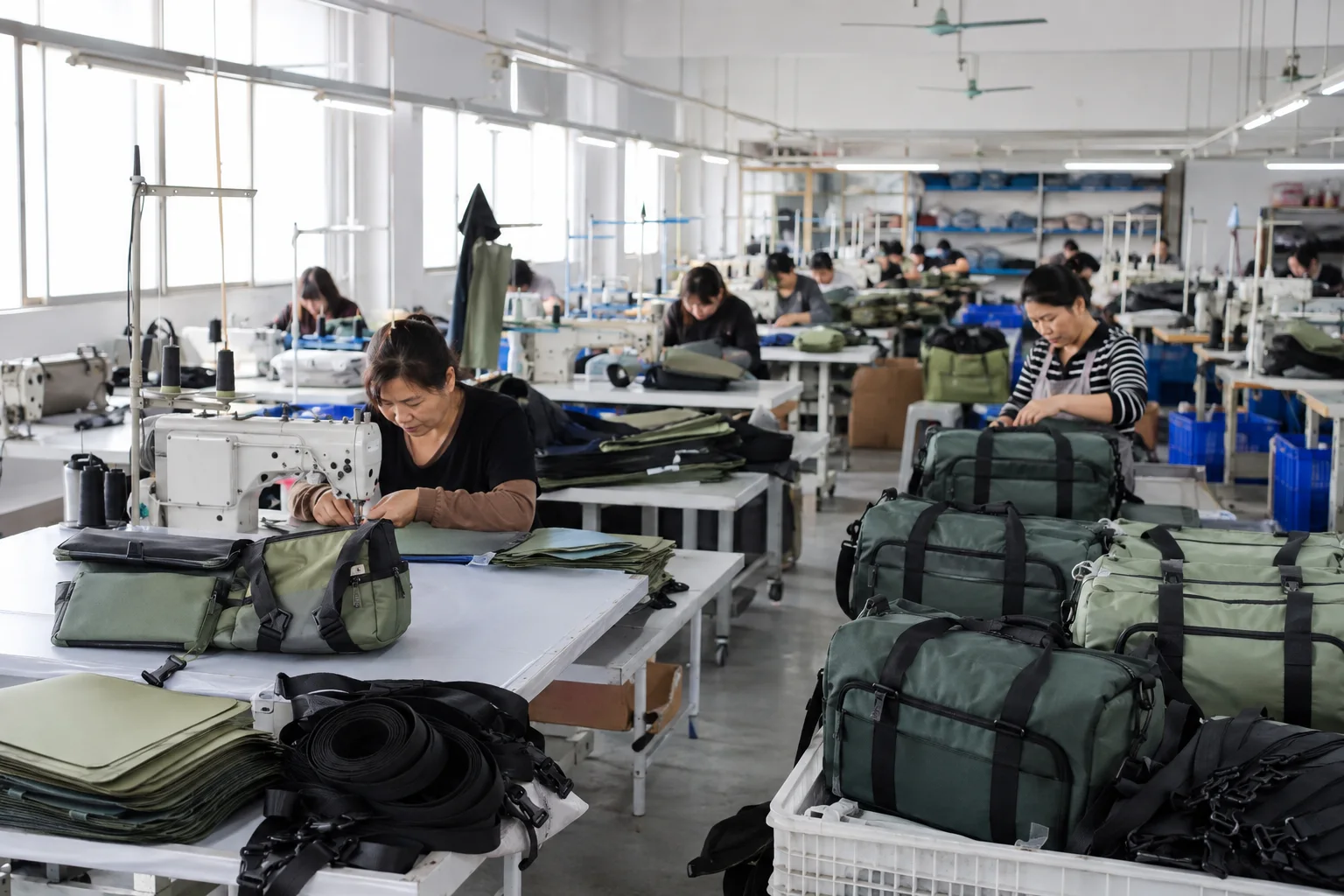
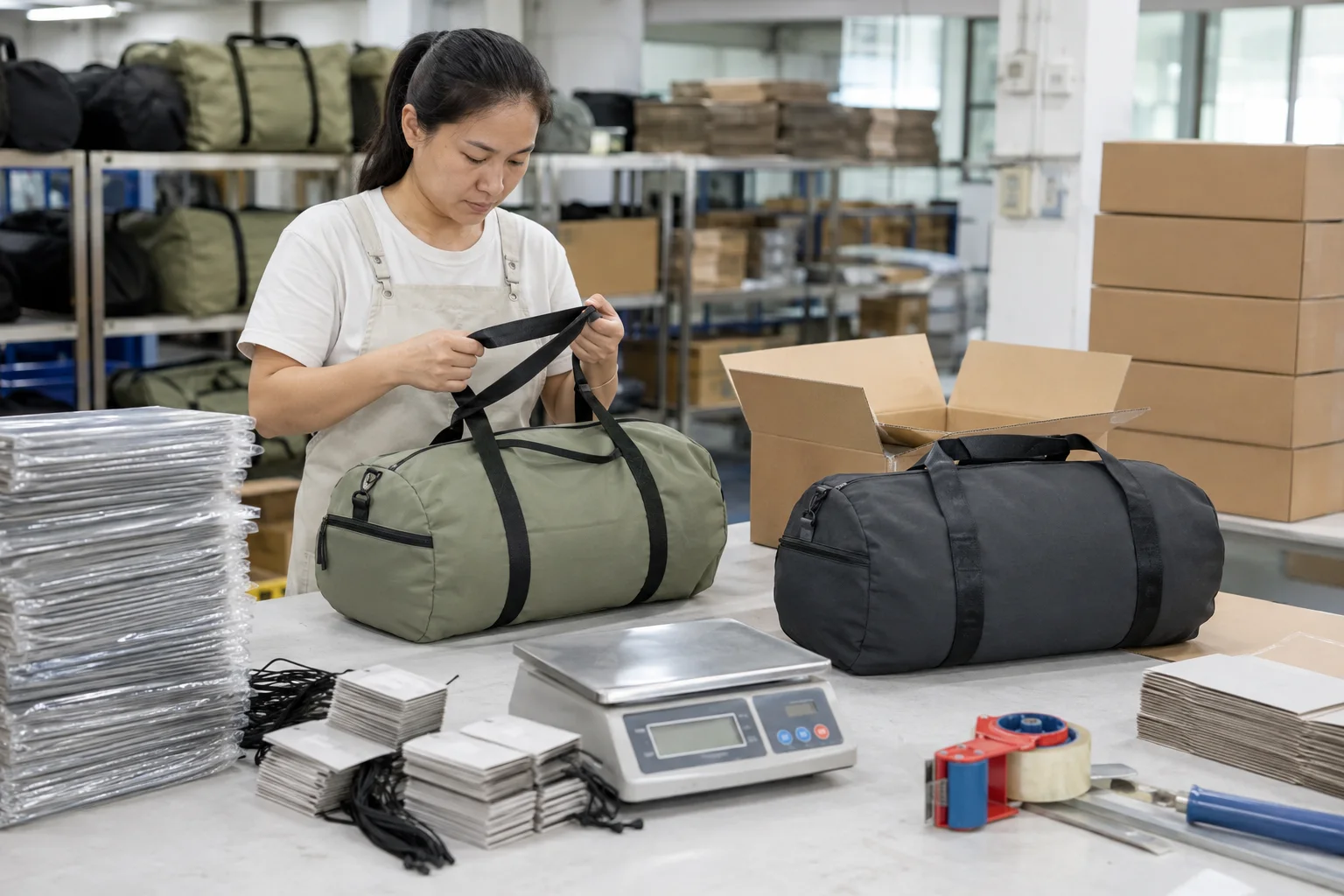
A gym-bag programme fails most often at the handle root and at the wet-pocket seam, not at the printed logo. Specify bartacks or a boxed-X at every handle and strap anchor, and state whether the wet cell is a high-frequency-welded TPU pocket or a sewn PEVA pouch: the two are different processes, with different leak paths. A sewn pouch can weep through needle holes after a few weeks of wet swimwear; a weld fails at an incomplete flange or a zipper tape that was never welded in. Write the process, the lining gauge (typically 0.15–0.3 mm TPU) and the leak-test method into the specification, rather than treating “wet-dry” as a feature name.
Capacity and opening type should be tied to how the bag is actually stuffed. A 55 L duffel with a tight U-shape zip will blow a slider if the corner radius is too sharp and the bag is packed firm; a 35 L backpack with a base shoe tunnel needs its own #8 zip and 100–200 GSM vented mesh, isolated from the clean compartment by a sealed panel, not a shared seam allowance. For programme-wide consistency, compare gym duffels, gym backpacks, wet-dry gym bags and shoe-compartment builds on those construction points, not only on litre counts.
