Quality Control › Incoming Material Inspection

Incoming Material Inspection for Bags: Fabric, Hardware, Webbing and Lining

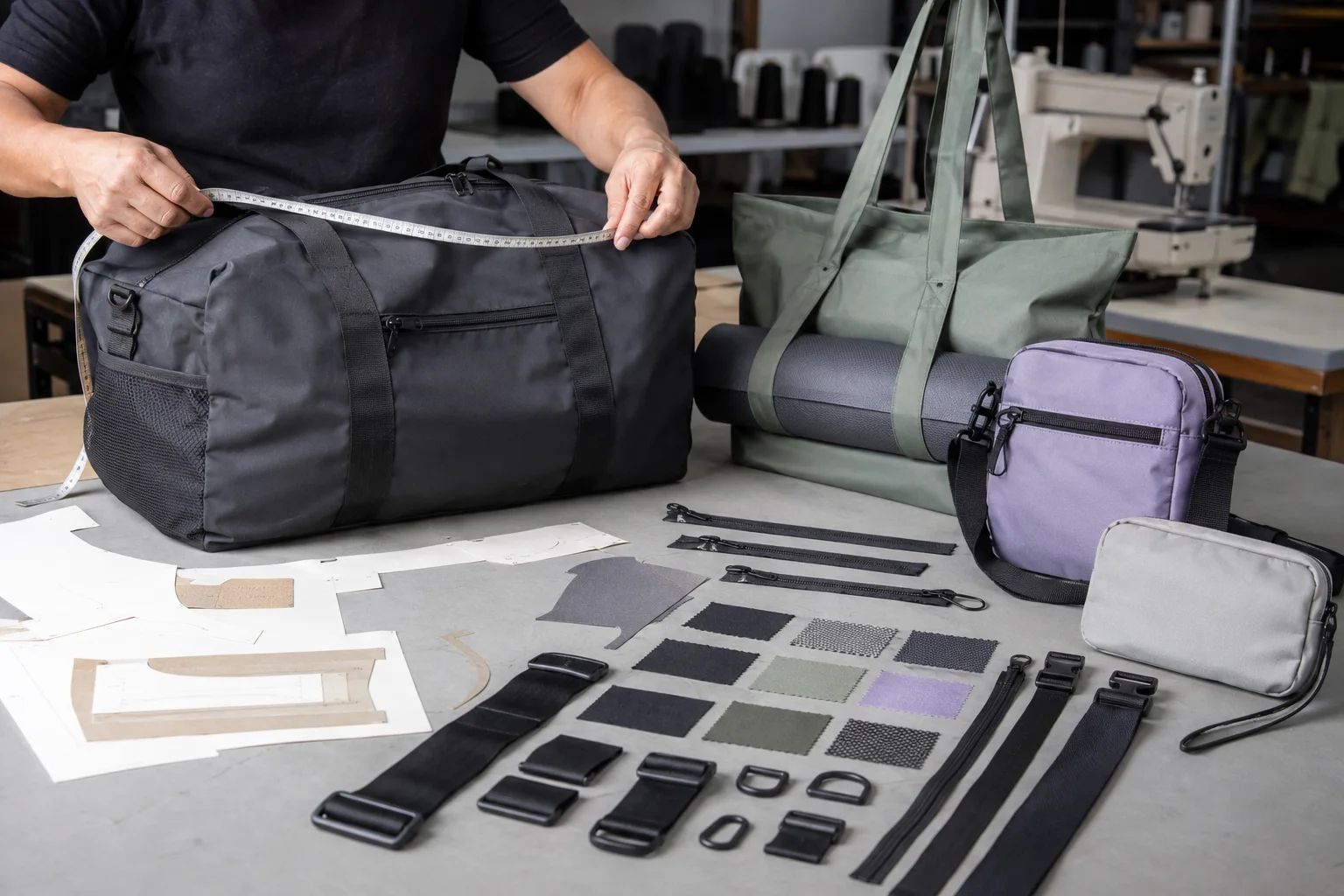
Stage 1 of six. Every fabric roll from our 200+ verified suppliers is unrolled at least 3 m, weighed for GSM to ±5%, matched to the approved lab dip under D65 light and sorted by shade lot before it reaches the cutting table. Zippers are cycled 1,000+ times, buckles are load-tested by width, webbing is measured to ±1 mm and lining is weighed per roll. Rejected material goes back to the supplier before a single panel is cut, which is why a fabric fault costs one roll and not a 300–5,000 pcs lot.
100% of rolls inspected·GSM ±5%·Zipper 1,000+ cycles·3 m unrolled per roll minimum·Colour vs lab dip under D65
Incoming Material Inspection-venlinker

100%

Fabric rolls inspected

By brief

Test requirements agreed before production

By brief

Test requirements agreed before production

3 m

Unrolled per roll minimum

200+

Verified fabric suppliers

0

Panels cut before sign-off
Fabric checks

Fabric Inspection for Bags: GSM, Colour, Shade Lots, Denier and Coating

Fabric choice, consumption, lining and finishing affect the unit price. Compare quotations against the same approved specification. material guide.

GSM Weight Check

A 100 cm² disc is cut from the roll end and weighed on a 0.01 g scale; the result must sit within ±5% of the approved swatch (a 600D polyester at 300 gsm passes between 285 and 315 gsm). Two discs per roll, three on rolls over 100 m. Applies to duffel shells, canvas totes and linings alike.
Tolerance ±5% · 2–3 discs per roll

Colour vs Lab Dip

Each roll is laid beside the signed lab dip and the golden sample swatch in a light box under D65 daylight and store light. A visible shift against the lab dip fails the roll; the buyer’s Pantone reference from materials & colours is the tie-break. Checked at both roll ends and the centre.
D65 light box · 3 points per roll

Shade Lot Sorting

Rolls are grouped by dye lot number and shade-compared to each other, not only to the swatch. Each group is labelled A, B, C and one group is issued per bag so left and right panels never come from two lots. On a 1,000 pcs order that is typically 2–4 shade groups across 8–15 rolls.
1 shade lot per bag · Rolls numbered

Denier and Construction

Thread count per inch is counted under a 10× loupe in warp and weft and compared with the spec (a 600D usually reads 60–70 × 40–50 ends per inch). Weave, ripstop grid size in mm and yarn type are confirmed against the sourcing order so a lighter substitute cannot pass on colour alone.
Loupe count · Warp and weft

Coating and Water Resistance

PU, PVC and TPU coatings are checked for thickness, uniformity and adhesion with a cross-hatch tape test; coated fabric for dry bags and wet bags gets a water column test against the spec, typically 1,000–3,000 mm. Coating peel at the roll edge fails the roll.
Cross-hatch tape test · Water column per spec

Fabric Fault Count

At least 3 m per roll (10% of long rolls) is run over the inspection frame under daylight lamps and scored on the 4-point system: holes, slubs, streaks, printing misregistration and creases. Rolls over 40 points per 100 yd² are rejected; 20–40 points are cut around at the marker stage.
4-point system · Reject over 40 points
Want swatches of the approved fabric before bulk? Every sample ships with cuttings from the same supplier lot.
Hardware and trims

Bag Hardware Inspection: Zipper Cycle Test, Buckle Load and Webbing Checks

Hardware is 5–15% of unit cost and the cause of most warranty returns. Ten pieces per batch are tested before the batch is released; options and sizes are on the trims & hardware page.
Component
Zippers #3–#10 (coil, moulded, metal)
Test
Open–close cycle on a jig, slider pull, tape width and colour
Sample per batch
10 zippers
Pass criteria
1,000+ cycles with no tooth skip; slider stays on; tape width ±0.5 mm
Typical failure caught
Slider sized for the wrong tape; teeth skipping after 200 cycles
Component
Side-release and cam buckles 20–50 mm
Test
Static load on a pull tester, 100 release cycles, burr check
Sample per batch
10 buckles
Pass criteria
Holds the rated load for the width (typically 30–80 kgf) for 1 min; no cracks; no sharp edge
Typical failure caught
Recycled POM that cracks in cold; flash on the mould line
Component
Webbing 20–50 mm (PP, nylon, polyester)
Test
Width, thickness, colour vs swatch, tensile pull
Sample per batch
3 m from each roll
Pass criteria
Width ±1 mm; colour match under D65; no edge fray after cut
Typical failure caught
Width 2 mm under, which lets the buckle slip
Component
D-rings, sliders, hooks (zinc alloy, steel)
Test
Dimension, plating adhesion, 24–48 h salt-spray on request
Sample per batch
10 pcs
Pass criteria
Inside width matches webbing ±0.5 mm; no plating peel; no burr
Typical failure caught
Plating peel on the inside curve
Component
Magnetic snaps and press studs
Test
Close–open cycles, pull-apart force
Sample per batch
10 pcs
Pass criteria
500+ cycles; pull-apart force within spec
Typical failure caught
Magnet loose in its cup after 100 cycles
Component
Lining 190T–210D polyester or nylon
Test
GSM, colour, coating, seam slippage on a swatch
Sample per batch
2 discs and 3 m per roll
Pass criteria
GSM ±5%; colour as swatch; no coating tack
Typical failure caught
Lining 15% lighter than the sample swatch
Component
Foam and padding (EVA, PE, mesh spacer)
Test
Thickness gauge, density, recovery after compression
Sample per batch
3 points per sheet
Pass criteria
Thickness ±0.5 mm; recovers within 30 s
Typical failure caught
Sheets 1 mm thin at the edge
Component
Mesh (polyester, 2–4 mm holes)
Test
Hole size, GSM, snag test with a 1 mm hook
Sample per batch
3 m per roll
Pass criteria
Hole size ±0.3 mm; no runs after snag
Typical failure caught
Mesh that ladders once cut
Component
Sewing thread (polyester core-spun)
Test
Ticket number, colour, tensile on a 30 cm length
Sample per batch
1 cone per box
Pass criteria
Ticket as spec; colour as swatch; no breaks
Typical failure caught
Wrong ticket number that shows on topstitch
Zipper test
1,000+ cycles
Buckle load
30–80 kgf by width
Webbing width
±1 mm
Sample
10 pcs per batch
Hardware options, YKK and SBS zipper sizes and custom mould timing are on the trims & hardware page.
Workflow

Bag Material QC Workflow: From Roll Arrival to Cutting Release

Seven steps between the delivery truck and the cutting table. We confirm the production schedule after reviewing the specification, material availability and target quantity. Allow separate time for sample approval and freight.
Day 0

Delivery matched to purchase order

Roll count, metres per roll, dye lot numbers and hardware cartons are checked against the sourcing order. A short delivery is flagged the same day so the 300 pcs minimum run is never cut short.
Day 0

Rolls numbered and quarantined

Each roll gets a number tag and goes to the inspection bay, not the cutting store. Nothing leaves the bay without a green pass label; a red label sends it to the supplier return area.
Day 0–1

GSM, colour and shade sorting

Two discs per roll weighed to ±5%, colour matched to the lab dip and golden sample swatch under D65, rolls grouped A/B/C by shade. Results written on the roll tag and the incoming log.
Day 0–1

Fabric frame inspection

At least 3 m per roll (10% of rolls over 100 m in full) run over the frame and scored on the 4-point system. Faults are chalk-marked so the cutter can plan around 20–40 point rolls.
Day 1

Hardware and trim tests

10 pcs per zipper, buckle and ring batch cycled, loaded and burr-checked on the jig; webbing measured from 3 m per roll. A failed batch is replaced from stock or reordered, usually 3–7 days for in-network hardware.
Day 1–2

Incoming report and release

The QC lead signs the incoming log: rolls passed, rolls returned, shade groups, hardware batches released. The report is filed under the project code and available to the buyer on request with the shipment documents.
Day 2

Cutting release

Only green-labelled rolls and released hardware move to cutting. The marker is planned per shade group so each bag is cut from one lot; the first 5 panels are then measured at inline inspection.
Incoming check
1–2 working days
Rolls inspected
100%
Reject route
Back to supplier
Release
Green label only

Approved Fabric Swatches With Your Bag Sample

Existing showroom samples are free, with courier paid by the buyer. Custom prototypes take 5–7 working days after the specification is confirmed. We quote the prototype fee, courier charge and any sample-fee credit before work starts.
Sampling plan

Bag Material Sampling Plan per Roll and per Batch: Rejection Handling

Speciality materials may need additional sourcing time; availability is confirmed before sampling.
Material
Shell fabric 420D–1680D
Lot unit
Per roll (50–120 m)
Sample drawn
2–3 GSM discs, 3 colour points, 3 m on frame
Fail action
Roll returned; replacement from same dye lot if available
Time cost of a fail
2–5 days in-network; 7–14 out-of-network
Material
Printed or sublimated fabric
Lot unit
Per roll
Sample drawn
Full roll on frame for misregistration; 3 m for GSM and colour
Fail action
Roll re-printed against the approved strike-off
Time cost of a fail
3–5 days
Material
Coated fabric (PU, PVC, TPU)
Lot unit
Per roll
Sample drawn
Cross-hatch tape test at 3 points; water column on 1 swatch
Fail action
Roll returned; coating batch re-run
Time cost of a fail
5–10 days
Material
Lining and mesh
Lot unit
Per roll
Sample drawn
2 GSM discs, 3 m on frame
Fail action
Roll returned or downgraded to pocket bags with buyer approval
Time cost of a fail
2–5 days
Material
Zippers
Lot unit
Per batch (typically 500–5,000 pcs)
Sample drawn
10 pcs cycled 1,000+ times
Fail action
Batch replaced from stock or reordered
Time cost of a fail
3–7 days
Material
Buckles, rings, sliders
Lot unit
Per batch
Sample drawn
10 pcs loaded and burr-checked
Fail action
Batch replaced; custom-moulded parts re-run adds 10–15 days
Time cost of a fail
3–7 days stock; 10–15 custom
Material
Webbing
Lot unit
Per roll (50–100 m)
Sample drawn
3 m measured and pulled
Fail action
Roll returned
Time cost of a fail
2–5 days
Material
Labels, hangtags, polybags
Lot unit
Per print batch
Sample drawn
20 pcs against the approved packaging proof
Fail action
Batch reprinted
Time cost of a fail
3–5 days
Fabric sample
3 m + 2 discs per roll
Hardware sample
10 pcs per batch
Fail route
Return, replace, log
Buyer informed
Same day if lead time moves
Material lead times and how they move the schedule are explained in cost factors and the production process.
Common problems

Bag Material QC Problems and How Incoming Inspection Prevents Them

Six material faults that reach the sewing line in factories that cut straight from the truck, and the incoming check that stops each one.
Bulk fabric is thinner than the sample
Cause: the mill shipped a lighter construction at the same colour. Control: GSM discs on every roll to ±5% plus a loupe thread count; a 270 gsm roll against a 300 gsm swatch is returned before cutting.
Left and right panels of one bag differ in shade
Cause: two dye lots cut into one marker. Control: shade groups A/B/C at incoming; the cutter issues one group per bag; recorded on the roll tag and checked again at the cutting check.
Zipper teeth skip after 2 weeks of use
Cause: slider bought for a different tape. Control: 10 zippers per batch run 1,000+ cycles on the jig before release; the zipper spec is fixed on the golden sample hardware card.
Coating peels from the fabric edge in the tropics
Cause: under-cured PU coating. Control: cross-hatch tape test at three points per roll and a water column test on coated fabric for waterproof backpacks and dry bags.
Buckle cracks in a cold warehouse
Cause: recycled POM with low impact strength. Control: static load for 1 min at the rated kgf for the width and a visual check for mould flash; batches from unknown moulders are not accepted.
Hardware arrives 10 days after fabric and stalls the line
The quotation and order documents confirm the payment schedule, inspection arrangements and shipment-release requirements. Review these terms before approving the order. trims & hardware.
Factory

Bag Material Inspection in Guangzhou: 200+ Suppliers, 5,000 m² Factory

The inspection bay sits between the receiving dock and the cutting store inside our own Huadu District factory, with a fabric frame, daylight light box, GSM cutter and hardware jig on the floor. 200+ verified suppliers, 10+ lines, 50,000+ bags a month; factory tours Mon–Sat.

2010

Founded

5,000 m²

Factory floor

500+

Staff

10+

Production lines

50,000+

Bags per month

200+

Fabric suppliers

Get a Bag Quote With the Material Inspection Plan

Send bag type, quantity from 300 pcs and any fabric spec. The quote comes back within 24 hours with the fabric options, incoming tolerances and lead time.
Related QC stages

Bag Quality Control Stages After Material Inspection: Sample to Shipment

Incoming inspection is stage 1 of six. Each stage below has its own checklist, sample size and tolerance; together they cover the bag from roll to loaded container.

Sample Approval & Golden Sample

Stage 2. The signed-off pre-production bag that fixes dimensions (±1 cm), logo position (±3 mm), colour, hardware and stitch density (8–10 spi) for every later check. Sealed, tagged and stored for the life of the program.
5–7 day sample · 1 free revision

Inline Production Inspection

Stage 3. Cutting checks, first-off approval on every line, then an hourly patrol of stitch density, seams, bar-tacks and logo panels against the golden sample. Defects are reworked before the bag reaches the next station.
Hourly patrol · 10+ lines

Final Inspection & AQL

Agree the sampling standard, inspection level, defect classes and acceptance criteria before production. AQL sampling is separate from our 100% pre-shipment inspection; the plan must match the order and the buyer’s requirements.
Agreed inspection criteria

Packing Inspection

Stage 5. Polybag, hangtag, labels, carton count and carton weight against the packing list (±0.5 kg), carton drop test, FNSKU scan, seal and strap check, then loading photos before the container door closes.
Follow the current destination-specific packing brief

Third-Party Inspection Support

Stage 6. SGS, BV, TUV or QIMA inspections and factory audits welcome on any order, commissioned and paid by the buyer. Inspector access Mon–Sat, samples pulled, documents and a room provided; typical booking lead time 3–5 days.
Buyer-commissioned · Mon–Sat access

Bag Quality Control Overview

The hub page: all 6 inspection stages on one table with sample sizes, tolerances and sign-off owners, plus a defect list sorted by AQL class. 100% pre-shipment inspection on every order.
6 stages · 1 factory

Factory Capabilities Hub

Our Guangzhou team coordinates design, cutting, sewing, printing and packing. Specialist logo or sealed-compartment requirements are reviewed during sampling, with the process and inspection criteria confirmed for your bag.
Founded 2010 · 50,000+ bags/month
Bag types

Material Inspection for Gym, Yoga, Running, Swim and Travel Bags by Category

The incoming checks are the same on every category; the fabric and hardware that get the closest look change with the bag.

Gym & Training Bags

600D–1680D polyester shells, #8–#10 zippers and 38 mm webbing on duffels and backpacks.

Yoga & Studio Bags

Canvas 10–16 oz, RPET and neoprene 2–4 mm; print registration on mat bags and totes.

Running & Outdoor Bags

210D–420D nylon, reflective tape adhesion and 20–25 mm buckles on waist packs.

Outdoor & Travel Bags

1680D polyester and TPU-coated fabric with a 1,000–3,000 mm water column on travel and dry bags.

Swim & Wet Gear Bags

Mesh hole size 2–4 mm and TPU film thickness for welded swim and wet bags.

Team & Equipment Bags

900D–1680D shells, #10 zippers and 50 mm webbing on team duffels and ball bags.

Work-Gym Lifestyle Bags

Coated polyester, EVA padding thickness ±0.5 mm and laptop sleeve foam on commuter bags.

Accessories & Sets

Lining 190T–210D, drawcords and woven labels on pouches and 3-piece sets.
Buyer fit

Incoming Material Inspection for Private Label, Activewear Brands, Startups and Retailers

Who asks for the incoming report and what each buyer type usually adds to it.

Private Label Programs

Nominated fabric suppliers and a fixed dye lot policy across 2,000–20,000 pcs a year; shade groups reported per reorder.

Activewear & Fitness Brands

Lab dip sign-off before bulk and GSM tolerance tightened to ±3% on tech-pack fabrics.

Startup & DTC Brands

First order of 300–1,000 pcs on in-network fabric so incoming rejects cost 2–5 days, not 14.

Distributors & Retailers

Incoming log and hardware test sheet filed with the shipment documents for 1,000–10,000 pcs lots.
FAQ

Incoming Material Inspection for Bags: Frequently Asked Questions

Every roll. Each one is unrolled at least 3 m on the frame, weighed for GSM at two points and colour-checked at three; rolls over 100 m are run 10% of their length. Sampling by roll count only makes sense on 50+ roll deliveries, and even then the GSM and colour checks stay at 100%. See the material guide for typical fabric figures.
±5% of the approved swatch by default, so a 300 gsm fabric passes between 285 and 315 gsm. Activewear brands with a tech pack often ask for ±3%, which we apply if the mill has confirmed it can hold it.
A lab dip is approved before bulk, usually in 5–7 days, and stored with the golden sample swatch. Every roll is compared with both under D65 and store light in a light box. The Pantone reference is the tie-break; details on materials & colours.
Ten pieces per batch. Zippers run 1,000+ open–close cycles on a jig with a slider pull; buckles hold their rated load for one minute (typically 30–80 kgf by width) and pass a burr check. Batches that fail are replaced from stock in 3–7 days. Zipper and buckle options are on trims & hardware.
It gets a red label, goes to the return area and the supplier is told the same day. Replacement from the same dye lot takes 2–5 days in-network, 7–14 days out-of-network. If the lead time moves, you hear from the project manager that day through the communication plan.
Yes. The log lists rolls received, rolls passed and returned, shade groups, GSM readings and hardware batch results. It is filed under your project code and sent with the shipment documents or on request during production.
Incoming inspection covers physical properties: weight, colour, construction, coating and faults. Chemical testing is arranged through a laboratory of your choice at your cost, and supplier declarations for fabric and hardware are collected on request. We do not claim certifications; see third-party inspection support.
Start with the right fabric

Get a Bag Quote With Fabric Options and Incoming Tolerances

Send bag type, quantity from 300 pcs, target price and any fabric or Pantone spec. Fabric options, incoming tolerances and lead time come back within 24 hours; a sample with swatches follows in 5–7 working days.
Tel / WhatsApp
+86 133 6639 6425
MOQ
300 pieces
Sample
5–7 working days
Incoming Material Inspection-venlinker
Have a Bag Project in Mind?
Share the bag type, quantity and target delivery date. We will review the details with you.